
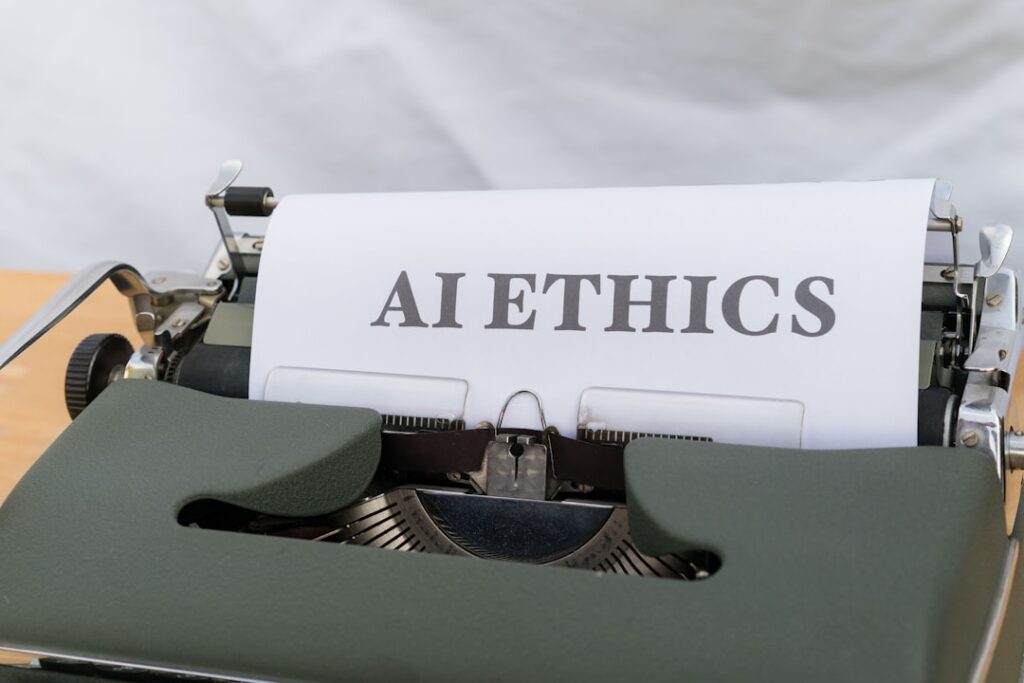
The Ethical Dilemma: My Thoughts on AI’s Role in Personal Data Collection
In an age where artificial intelligence is no longer a futuristic concept but an integral part of our daily lives, the conversation inevitably shifts to its profound implications. Specifically, AI’s insatiable appetite for personal data presents a complex ethical dilemma that demands our attention. As someone deeply invested in understanding the intersection of technology and human well-being, I find myself constantly grappling with the paradox: AI offers unparalleled convenience and innovation, yet it simultaneously raises critical questions about privacy, autonomy, and the very fabric of our digital existence. This isn’t just about what data is collected, but how AI collects, interprets, and uses it, often in ways that are opaque to the individual. It’s about the unseen forces shaping our world, driven by algorithms learning from our most intimate digital footprints.
The Invisible Hand of AI: Unveiling the Scale of Personal Data Acquisition
The sheer volume and diversity of personal data AI systems now acquire are staggering. It’s no longer just about the information we consciously share, like our name and email address. AI’s role extends far beyond explicit inputs, delving into the implicit and inferred. Think about your smartphone: AI algorithms track your location, app usage patterns, typing speed, voice inflections, even how you hold the device. Smart home devices listen to commands, learning speech patterns and household routines. Social media algorithms analyze every like, share, comment, and the duration you spend on content, building incredibly detailed profiles of your interests, political leanings, and emotional states. E-commerce platforms track browsing history, purchase patterns, and even what you didn’t buy, using AI to predict future desires.
This data isn’t just collected; it’s interconnected. AI excels at finding correlations across disparate datasets, creating a holistic, often eerily accurate, digital twin of you. A fitness tracker’s heart rate data might be linked with your search history for health concerns, your social media posts about stress, and even your grocery delivery preferences. The result is a mosaic of information far more revealing than any individual piece. This extensive, often invisible, data acquisition by AI systems forms the bedrock of personalized experiences, targeted advertising, and predictive analytics. While it offers undeniable benefits – from tailored news feeds to early disease detection – it simultaneously erodes the traditional boundaries of privacy, leaving us feeling constantly observed.
Beyond the Click: The Ethical Tightrope of AI-Driven Profiling and Prediction
Once collected, personal data becomes the fuel for AI’s most powerful, and perhaps most ethically fraught, capabilities: profiling and prediction. AI algorithms can sort individuals into categories based on a myriad of attributes, often without our direct knowledge or consent. These profiles can be used for benign purposes, like recommending a movie you might enjoy, but they can also influence critical aspects of our lives. Consider credit scoring, insurance premiums, job applications, or even access to essential services. An AI might predict your creditworthiness based on your browsing habits, or your likelihood of claiming insurance based on your social media activity, rather than traditional metrics. This isn’t just about data points; it’s about AI making judgments about individuals that can have profound real-world consequences.
The ethical tightrope here is twofold. First, there’s the issue of opacity. The algorithms that create these profiles are often proprietary and incredibly complex, making it nearly impossible for individuals to understand how decisions are made about them. This lack of transparency undermines accountability and makes challenging erroneous or biased predictions incredibly difficult. Second, there’s the potential for manipulation. If an AI can accurately predict our desires, vulnerabilities, or even emotional states, it can be used to influence our decisions in subtle, yet powerful, ways. This extends beyond simple advertising; it touches upon political persuasion, consumer behavior, and even personal choices, raising deep concerns about autonomy and free will. The power of predictive analytics, while revolutionary, demands an equally robust ethical framework to ensure it serves humanity rather than exploiting it. The World Economic Forum frequently highlights these tensions, urging a balanced approach.
Navigating the Illusion of Choice: True Consent in an AI-Saturated Digital World
At the heart of ethical data collection lies the principle of informed consent. Traditionally, this meant clearly explaining what data would be collected and how it would be used, then obtaining explicit agreement. However, in the age of AI, this concept has become increasingly blurred, often creating an illusion of choice rather than genuine consent. How can someone give truly informed consent when the AI system’s data collection methods are constantly evolving, its predictive capabilities are opaque, and the sheer volume of data involved is incomprehensible to the average user? We are often presented with lengthy, legalese-filled terms and conditions that few read, reducing consent to a mere click of an “I Agree” button. This isn’t just impractical; it’s fundamentally unethical.

Furthermore, the ubiquity of AI means opting out can often mean opting out of essential services or participation in modern society. Can you truly opt out of data collection if your smart city infrastructure uses AI to manage traffic flow, or if your healthcare provider leverages AI for diagnostics? The balance of power is heavily skewed towards the data collectors, making individual refusal a significant barrier. My thoughts lean towards a need for a paradigm shift: consent needs to be dynamic, granular, and easily revocable. It should be presented in clear, concise language, with a focus on privacy-by-design principles where data minimization is the default. Organizations like the Center for AI and Digital Policy advocate for stronger consent mechanisms and greater transparency from AI developers.
When Algorithms Judge: Confronting Bias and Discrimination in AI’s Data Ecosystems
One of the most alarming ethical dilemmas arising from AI’s role in personal data collection is the perpetuation and amplification of societal biases. AI systems learn from the data they are fed, and if that data reflects existing human biases, the AI will internalize and often exacerbate them. This can lead to discriminatory outcomes in areas ranging from facial recognition (where AI often misidentifies people of color at higher rates) to loan applications (where algorithms might implicitly penalize certain demographics). The data collected, even if seemingly neutral, can carry historical prejudices. For instance, if historical hiring data shows a preference for male candidates in a particular field, an AI trained on that data might disproportionately favor male applicants, regardless of individual qualifications.
The problem is compounded by the scale at which AI operates. A biased human decision might affect a handful of individuals; a biased algorithm can affect millions, silently and systematically. This raises profound questions about fairness, justice, and accountability. Who is responsible when an AI system, trained on collected personal data, makes discriminatory decisions? My perspective is that we must move beyond simply identifying bias to actively designing AI systems and data collection strategies that are inherently fair and equitable. This requires diverse datasets, rigorous auditing, and a commitment to understanding understanding algorithmic bias. Organizations like the AI Now Institute are at the forefront of researching and advocating against these insidious forms of discrimination.
Reclaiming Our Digital Selves: Charting a Course for Responsible AI Data Practices
Given the complexities and ethical pitfalls, charting a course for responsible