
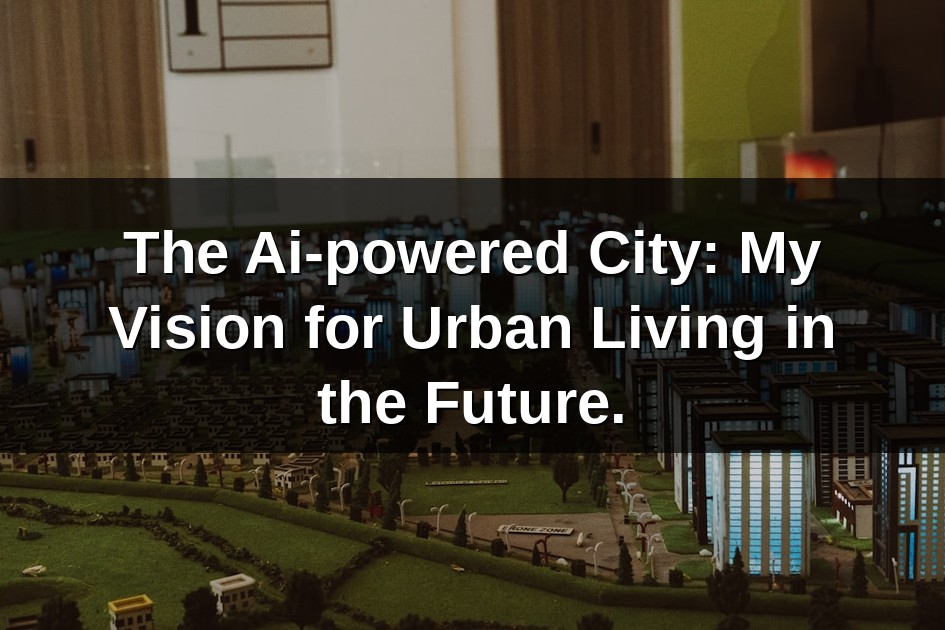
The AI-powered City: My Vision for Urban Living in the Future
Imagine a city that breathes, learns, and anticipates your needs. A metropolis where every street, every building, and every service is seamlessly interconnected, working in harmony to create an unparalleled quality of life. This isn’t a distant science fiction fantasy; it’s the core of my vision for the AI-powered city. It’s a future where artificial intelligence isn’t just a tool, but the very operating system of urban existence, transforming our concrete jungles into intelligent, responsive ecosystems designed for human flourishing and environmental resilience. My vision moves beyond mere “smart” features to a truly symbiotic relationship between technology, infrastructure, and the people who call these future cities home.
Reimagining Our Urban Fabric Through Intelligent Systems
At the heart of my AI-powered city vision lies a complete overhaul of our urban infrastructure, making it inherently intelligent and adaptive. Forget static roads and unresponsive utilities; here, every component of the city’s physical structure is embedded with sensors, connected by ultra-fast networks, and managed by sophisticated AI algorithms. This isn’t just about efficiency; it’s about creating a living, breathing urban organism that constantly optimizes itself for the benefit of its inhabitants and the planet.
The Intelligent Spine: Dynamic Infrastructure and Predictive Maintenance
In this future, roads are not just pathways but data conduits, equipped with sensors that monitor traffic flow, road conditions, and even pedestrian movement in real-time. AI analyzes this data to dynamically adjust traffic lights, reroute autonomous vehicles, and even suggest optimal routes for human-driven cars, eliminating congestion before it starts. Beyond traffic, AI manages the city’s entire utility grid – water, electricity, waste – with unprecedented precision. Predictive maintenance, powered by machine learning, identifies potential failures in pipes, power lines, or public transport systems long before they occur, scheduling proactive repairs and minimizing disruptions. This means fewer blackouts, less water waste, and consistently reliable services, all orchestrated by an unseen, intelligent hand. This proactive approach ensures the city’s critical systems are always running at peak performance, a stark contrast to today’s reactive maintenance models. This intelligent spine is the foundation upon which all other innovations are built, ensuring stability and reliability for every citizen.
Seamless Daily Rhythms: Life in the AI-Orchestrated City
My vision for the AI-powered city transforms the daily experience of its residents, making urban living incredibly convenient, personalized, and stress-free. From the moment you wake up, AI is working in the background to enhance your day, not dictate it. It’s about empowering individuals with more time, better choices, and a deeper connection to their community, all facilitated by intelligent systems.

Personalized Mobility and Effortless Navigation
Imagine your morning commute. Instead of wrestling with traffic or crowded public transport, your personal AI assistant has already coordinated an optimal, multi-modal journey. Perhaps an autonomous pod arrives at your doorstep, seamlessly connecting with a high-speed urban transit system, or even a shared electric bike positioned perfectly for the last leg of your trip. AI algorithms analyze real-time demand, weather conditions, and individual preferences to provide truly personalized mobility solutions. Public transport schedules flex dynamically to meet demand, and autonomous delivery drones handle logistics, freeing up street space and reducing noise pollution. This system doesn’t just get you from A to B; it optimizes your journey for comfort, speed, and sustainability. For example, if there’s a sudden downpour, your AI might suggest an enclosed autonomous shuttle instead of a scooter, ensuring your comfort. This level of personalized service transforms commuting from a chore into a seamless part of daily life.
Responsive Public Spaces and Enhanced Community Engagement
Public spaces in my AI-powered city are no longer static. Parks, plazas, and community centers adapt to the needs and preferences of their users. AI-powered sensors monitor footfall, noise levels, and environmental conditions, dynamically adjusting lighting, temperature, and even the layout of flexible furniture to create optimal environments for relaxation, play, or social gathering. Interactive digital displays provide real-time information about local events, community initiatives, and personalized recommendations for activities based on your interests. AI also facilitates deeper community engagement. Citizen platforms, powered by AI, allow residents to propose ideas, vote on local projects, and provide feedback directly to urban planners, ensuring that city development is truly democratic and responsive to its people. This fosters a stronger sense of ownership and belonging, transforming passive residents into active co-creators of their urban environment. Imagine a park where the ambient music changes based on the demographic of people present, or where a quiet zone automatically activates when a certain decibel level is reached.
Nurturing a Greener Tomorrow with Algorithmic Precision
Environmental sustainability is not an afterthought in my AI-powered city; it’s intricately woven into its very fabric. AI acts as the ultimate ecological steward, optimizing resource consumption, minimizing waste, and actively working to restore and enhance natural ecosystems within the urban sprawl. This vision leverages technology to address the most pressing environmental challenges facing cities today.

Resource Optimization and Waste Management Reinvented
Energy consumption is meticulously managed by AI, which predicts demand patterns, optimizes grid distribution, and seamlessly integrates renewable energy sources. Buildings are “smart” in the truest sense, with AI systems adjusting heating, cooling, and lighting based on occupancy, weather forecasts, and even individual preferences, drastically reducing their carbon footprint. Water management becomes incredibly efficient; AI monitors usage patterns, detects leaks with pinpoint accuracy, and optimizes irrigation systems in public green spaces based on real-time soil moisture and weather data. Waste management is revolutionized through intelligent sorting facilities and optimized collection routes, minimizing landfill use and maximizing recycling. AI even plays a role in fostering urban agriculture, monitoring plant health and optimizing growing conditions in vertical farms and community gardens, contributing to local food security. This holistic approach to resource management ensures that the city operates with minimal environmental impact, setting a new standard for urban sustainability. The global smart cities market is projected to grow significantly, underscoring the increasing focus on such integrated solutions.
Biodiversity Enhancement and Climate Resilience
Beyond efficiency, AI actively contributes to enhancing urban biodiversity. AI-powered drones monitor air and water quality, identifying pollution hotspots and guiding targeted clean-up efforts. Green spaces are designed and managed with ecological principles in mind, using AI to select native plant species that thrive locally and support indigenous wildlife. Climate resilience is built into the city’s DNA; AI models predict extreme weather events with greater accuracy, allowing for proactive measures like dynamic flood defenses or optimized emergency response routes. Urban planning leverages AI to simulate the impact of different development scenarios on local microclimates, ensuring new constructions contribute to cooling and greening the city rather than exacerbating heat island effects. This vision creates a city that not only survives environmental challenges but actively thrives in harmony with nature. Cities, as outlined by the UN Sustainable Development Goals, are crucial for achieving global sustainability.
Governing with Foresight: AI’s Role in Urban Management
In my AI-powered city, governance moves beyond reactive decision-making to a proactive, data-driven approach that benefits all citizens. AI becomes a powerful ally for city leaders, providing insights, predicting trends, and fostering transparency and accountability. It’s about creating a more effective, equitable, and responsive government.

Data-Driven Decision Making and Predictive Urban Planning
City administrators gain access to a comprehensive, real-time “digital twin” of the entire metropolis. This AI-powered model integrates data from every urban system – traffic, public health, demographics, economic activity – to provide unprecedented insights into the city’s pulse. AI algorithms analyze this vast dataset to identify emerging trends, predict future challenges (e.g., housing shortages, public health crises, infrastructure strain), and simulate the impact of various policy decisions before they are implemented. This allows for truly predictive urban planning, where resources are allocated strategically, and interventions are made precisely where and when they are needed most. For instance, AI could identify neighborhoods at risk of gentrification and propose targeted affordable housing initiatives, or pinpoint areas needing more green space based on population density and air quality data. This proactive governance minimizes waste, maximizes positive impact, and ensures the city evolves intelligently. Research from institutions like the MIT Senseable City Lab often explores these advanced urban analytics.
Enhanced Public Safety and Emergency Response
Public safety is significantly enhanced through AI. Intelligent surveillance systems, prioritizing privacy and ethical guidelines, can detect unusual activities or potential hazards in public spaces, alerting human responders without constant human monitoring. AI analyzes patterns in crime data to predict high-risk areas and deploy resources more effectively, shifting from reactive policing to preventive measures. In emergencies, AI orchestrates a rapid and highly coordinated response. It can identify the fastest routes for emergency vehicles, manage traffic diversions, and even use drone networks to provide real-time situational awareness to first responders, saving precious minutes and lives. This intelligent layer of safety and response creates a more secure environment for everyone, where threats are identified and mitigated swiftly and efficiently. Imagine a system that can detect a fallen tree blocking a road and automatically dispatch a clean-up crew while rerouting traffic in seconds.