
The Ai in Your Car: My Analysis of Autonomous Driving Features
The promise of a truly self-driving car has long captured our imaginations, fueled by science fiction and ambitious tech demos. Yet, for many of us, the “AI in our car” still feels like a concept reserved for the distant future. The reality, however, is that artificial intelligence is already a deeply integrated, often subtle, co-pilot in millions of vehicles on the road today. It’s not always about a car driving itself entirely; more often, it’s about the sophisticated algorithms that assist us, enhance safety, and fundamentally change how we interact with our vehicles. In this analysis, I want to cut through the hype and dive into the practical applications and underlying technology of autonomous driving features as they exist right now, and what they truly mean for your daily commute and beyond. My goal is to provide a clear, unbiased perspective on the current capabilities and future trajectory of AI in our automotive experience.
Beyond the Hype: Deconstructing AI’s Role in My Daily Drive
When we talk about AI in cars, it’s easy to jump straight to Level 5 autonomy – a car without a steering wheel or pedals, capable of handling any driving scenario. But let’s be realistic: that’s still some way off for widespread consumer adoption. My analysis focuses on the more immediate and tangible ways AI is already impacting our driving experience. This isn’t about futuristic concepts; it’s about the Advanced Driver-Assistance Systems (ADAS) that are becoming standard features in many new vehicles. These systems, powered by complex AI algorithms, are designed to assist the driver, not replace them entirely. They range from simple warnings to active interventions, subtly shifting the burden of certain driving tasks from human to machine.
From the moment you start your car, AI is at work. It’s processing data from an array of sensors, making instantaneous calculations, and often making small, imperceptible adjustments that contribute to a smoother, safer journey. This is where the distinction between “assisted” and “autonomous” becomes crucial. While these features leverage AI, they almost always require human supervision and intervention. My personal experience, and the data I’ve reviewed, suggests that understanding this nuanced partnership is key to appreciating the current state of AI in our cars. For a deeper understanding of these foundational technologies, consider exploring resources on understanding ADAS features.
Think about features like Blind Spot Monitoring (BSM), which uses radar to detect vehicles in your blind spots and warns you with a visual or audible alert. Or Rear Cross-Traffic Alert (RCTA), which can detect approaching vehicles when you’re backing out of a parking space. These are not “autonomous” in the sense of the car driving itself, but they are undeniably AI-driven, processing real-time sensor data to enhance your awareness and prevent potential collisions. Even Automatic Emergency Braking (AEB), which can independently apply the brakes to avoid or mitigate a collision, relies on AI to interpret sensor data, identify threats, and make split-second decisions far faster than a human could.
Navigating the Spectrum: My Assessment of Current Autonomous Capabilities (Levels 0-3)
To properly analyze the AI in our cars, it’s essential to understand the different levels of driving automation as defined by SAE International’s J3016 Standard. Most vehicles on the road today operate within Levels 0 to 2, with a growing number offering Level 2+ and some pushing into Level 3. My assessment of these capabilities highlights where AI truly shines and where its limitations become apparent.
Level 0: No Automation
This is the traditional car, where the human driver performs all tasks. While no “autonomous features” exist here, even these cars might have basic AI-powered components like engine management systems that optimize performance. The driver is fully responsible for all aspects of driving, and the vehicle offers no assistance with dynamic driving tasks.
Level 1: Driver Assistance
Here, AI begins to assist with either steering OR speed control, but not both simultaneously. My analysis finds these features incredibly useful for reducing driver fatigue on long journeys. Examples include:
- Adaptive Cruise Control (ACC): AI uses radar or cameras to maintain a set distance from the car ahead, automatically accelerating or braking. It’s a game-changer for highway driving, though I’ve found its reaction time can sometimes be a bit conservative in heavy traffic, leading to slightly abrupt braking or slow acceleration. Modern ACC systems often include stop-and-go functionality, making them invaluable in congested conditions.
- Lane Keeping Assist (LKA): AI uses cameras to detect lane markings and gently steers the vehicle back into the lane if it begins to drift. While helpful, it’s often more of a warning system than a true steering assistant, sometimes feeling a bit like a “ping-pong” effect between lane lines. It generally requires hands on the wheel and is designed to prevent unintentional lane departure, not to steer the car continuously.
Level 2: Partial Automation — The Hands-On Co-Pilot
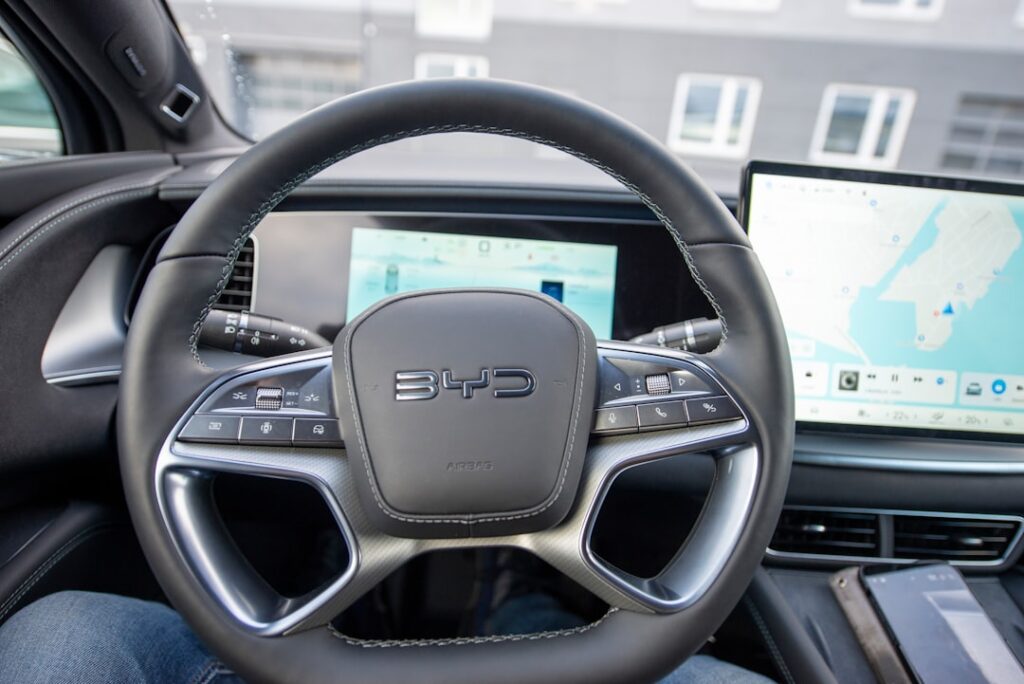
This is where AI takes control of both steering AND speed control simultaneously, under specific conditions. Crucially, the driver MUST remain engaged, with hands on the wheel and eyes on the road, ready to take over at any moment. My experience with Level 2 systems, such as Traffic Jam Assist or Highway Driving Assist, has shown them to be highly effective in reducing fatigue during monotonous driving. The car manages acceleration, braking, and steering to keep you centered in your lane and at a safe distance from other vehicles.
However, the “hands-on” requirement is a constant reminder of its limitations. If you remove your hands for more than a few seconds, most systems will issue warnings and eventually disengage. This underscores the core principle of Level 2: it’s an assistance system, not a replacement for the driver. The AI handles the dynamic driving task, but the human is the fallback. This level represents a significant leap in capability from Level 1, offering a more integrated and comprehensive driving assistance experience.
Level 2+: Enhanced Partial Automation — Pushing the Boundaries
While not an official SAE level, “Level 2+” is a term widely used in the industry to describe advanced Level 2 systems that offer more sophisticated capabilities, sometimes allowing for hands-off driving under specific conditions. Examples include General Motors’ Super Cruise, Ford’s BlueCruise, and Tesla’s Autopilot/Full Self-Driving Beta (when operating in Level 2 mode). These systems often utilize enhanced sensor suites and more powerful AI to navigate complex highway interchanges, perform automated lane changes, and even drive on certain city streets.
My analysis reveals that these systems significantly elevate the driving experience, offering prolonged periods of hands-free operation. However, the critical caveat remains: the driver is still responsible for monitoring the environment and must be ready to intervene immediately. These systems typically employ advanced driver monitoring cameras to ensure the driver’s eyes remain on the road, preventing over-reliance. They represent the cutting edge of what’s currently available to consumers for daily driving, demonstrating impressive AI capabilities within a constrained operational design domain (ODD).
Level 3: Conditional Automation — The Mind-On Transition
Level 3 is a pivotal, yet controversial, step in autonomous driving. Here, the vehicle can perform all dynamic driving tasks, and the driver is no longer required to monitor the driving environment. This means “eyes-off” driving is permitted under specific conditions (e.g., on certain highways, at specific speeds, in good weather). However, the driver must still be ready to take over when prompted by the system, which can happen with a few seconds’ notice.
Mercedes-Benz’s DRIVE PILOT is one of the first commercially available Level 3 systems in select markets. My assessment is that the “handover problem” is the biggest challenge at this level. The transition from AI control back to human control requires the driver to re-engage quickly and safely, which can be difficult if they’