The Future of AI in Creative Industries: My Vision for Human-AI Collaboration
Alright, let’s cut through the noise. Everywhere I look, people are either panicking about AI replacing every creative job under the sun, or they’re hyping it up as the sole future of art. Both narratives, frankly, miss the mark. As someone who’s spent years observing, investigating, and reporting on technological shifts, I’ve developed a different vision. It’s not about AI versus humans. It’s about a deeply intertwined, symbiotic relationship. A dance, if you will, where each partner brings unique strengths to the floor. This isn’t just a prediction; it’s a blueprint for creative survival and unparalleled innovation.
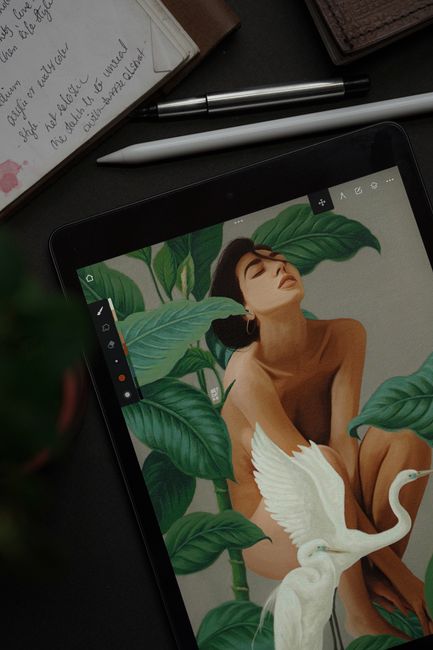
The Co-Pilot Paradigm: AI as the Ultimate Creative Assistant
Forget the scary headlines. The ugly truth? AI isn’t coming for your paintbrushes, your pens, or your guitar. Not in the way you think, anyway. What it is doing is offering a suite of unprecedented tools, a digital co-pilot that can handle the grunt work, explore countless iterations, and unearth connections the human mind might miss. Trust me on this: the future of creative industries belongs to those who learn to fly with this co-pilot, not against it.
Beyond Automation: Augmenting Intuition and Originality
I’ve noticed a lot of folks get stuck on AI’s ability to automate. Sure, it can generate text, images, or even music. But that’s the low-hanging fruit. The real power lies in augmentation. Imagine a graphic designer sketching an initial concept, then feeding it to an AI that instantly generates a hundred variations in different styles, color palettes, and compositions. The designer doesn’t pick the best AI output; they use those outputs as inspiration, as a launching pad, to refine their *own* original idea faster and more extensively than ever before. This is where AI truly excels: in accelerating the exploration phase, allowing the human to focus on the unique spark, the emotional resonance, the cultural nuance that only we possess. This is why I maintain that there are still human-only skills that AI can never replace.
Think about a musician. An AI can analyze millions of songs, identify patterns, and even compose melodies in a specific genre. But can it feel the heartbreak that inspired a ballad? Can it inject the raw, unpolished energy of a live performance? No. A human musician, however, can use AI to instantly generate harmonic progressions, drum patterns, or even orchestrations for their core melody. They then layer their soul, their lived experience, and their unique sound over that foundation. AI becomes a force multiplier for human intent.
Creative Fields Reimagined: Where Human-AI Collaboration Shines Brightest
This isn’t some abstract concept. It’s already happening, quietly, in corners of every creative industry. Here’s my breakdown of where this collaboration will truly redefine the game:

Writing & Storytelling: The Human Narrative Engine, Supercharged
The question of Will AI replace writers? has been dogging us for a while now. My honest opinion, after years of observation, is a resounding no. But it will redefine what a writer does. AI is a fantastic research assistant. It can synthesize vast amounts of information, generate outlines, and even draft initial paragraphs. For a journalist like me, it’s invaluable for digging up background details or summarizing dense reports. For a novelist, it can brainstorm plot twists, character names, or even descriptions of fantastical worlds. But the human element—the ability to imbue text with genuine emotion, nuanced perspective, and a truly unique voice—that’s our domain. We are the storytellers. AI provides the scaffolding, the raw materials. We build the cathedral.
And let’s not forget the crucial role of human editors. Even with AI’s ability to generate content, the crucial role of human editors in an AI content workflow becomes even more pronounced. They are the quality control, the ethical gatekeepers, and the masters of refinement, ensuring the AI’s output aligns with human intent and maintains authenticity.