My Experience: Learning to Work With AI, Not Against It
The first time I really grappled with Artificial Intelligence wasn’t through a futuristic movie or a complex academic paper, but through a growing sense of unease in my own professional life. Suddenly, it seemed, every conversation revolved around AI’s capabilities, its potential to automate, optimize, and, yes, even replace. My initial reaction was a cocktail of skepticism and defensiveness. I saw AI as a competitor, a threat to the unique human touch I believed defined my work. The narrative in my head was simple: it was us versus them, human ingenuity against silicon efficiency. This mindset, I’ve come to realize, was not only limiting but fundamentally flawed. This is the story of how I transitioned from viewing AI as an adversary to embracing it as an invaluable partner, fundamentally reshaping my approach to work and creativity.
When the Robots Knocked: My Initial Resistance to AI
Like many, my introduction to the practical implications of AI wasn’t a gentle one. It felt less like an invitation to innovate and more like a forced reckoning. The early news cycles, often sensationalized, painted a picture of job displacement and a future where human skills would become obsolete. Naturally, I dug in my heels. My work involved a significant amount of creative problem-solving, nuanced communication, and strategic thinking – areas I considered uniquely human. How could a machine truly understand context, empathy, or the subtle art of persuasion? I feared that if I leaned on AI, I would lose my edge, my creativity would atrophy, and my unique contributions would be diluted. This fear wasn’t just about my job; it was about my professional identity.
I remember a particular project where a colleague suggested using an AI tool to draft initial content. My immediate reaction was visceral. “Why bother? I can do it better, faster, and with more soul,” I thought. I saw it as a shortcut that would ultimately lead to mediocrity, stripping away the very essence of what made our work valuable. This resistance wasn’t born out of ignorance of AI’s existence, but a misunderstanding of its role. I perceived it as a replacement for human intelligence, rather than an augmentation of it. This deeply ingrained belief system became the first significant hurdle I had to overcome on my journey.
Shifting Gears: Realizing AI Wasn’t My Rival, But a Resource
The turning point wasn’t a sudden epiphany, but a gradual realization fostered by observation and a healthy dose of humility. I started noticing colleagues who, instead of fearing AI, were *thriving* with it. They weren’t being replaced; they were becoming more productive, more innovative, and frankly, happier in their roles. They were using AI to handle the tedious, repetitive tasks that often drained our energy, freeing them up for more complex, strategic work. It was like watching someone discover a new superpower, while I was still clinging to my old, familiar tools.
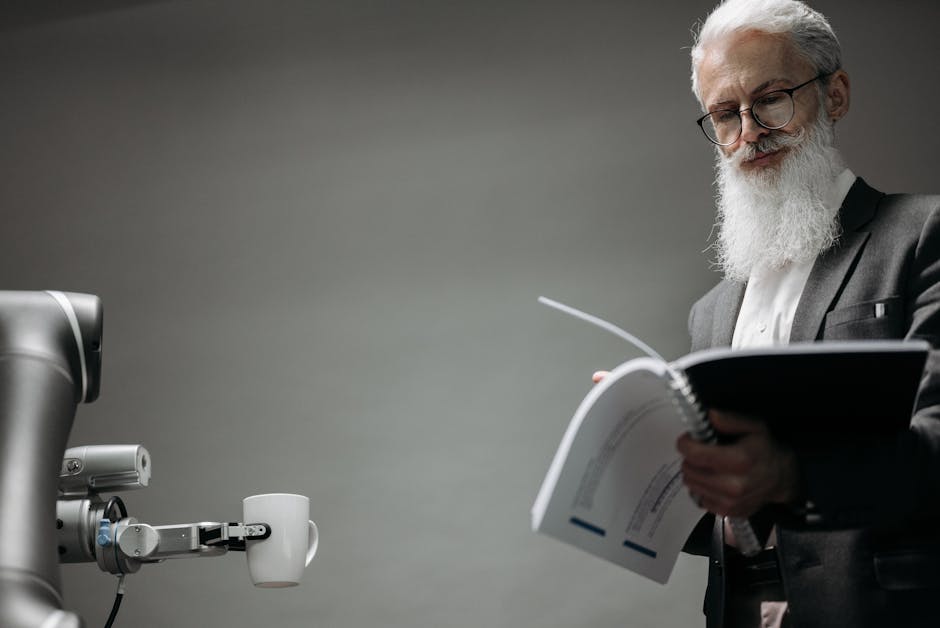
My mindset began to shift from “AI vs. Me” to “AI + Me.” I started viewing AI not as a competitor for my job, but as an incredibly powerful assistant, a co-pilot that could handle the heavy lifting of data analysis, initial content generation, or mundane administrative tasks. This perspective allowed me to see AI as a tool for leverage, a way to amplify my existing skills rather than diminish them. It was about working smarter, not harder. This crucial mental pivot was the first step towards truly integrating AI into my workflow, transforming my apprehension into curiosity and eventually, excitement. It became clear that the real challenge wasn’t about outcompeting AI, but about learning to effectively collaborate with it.
Crafting a New Workflow: My Hands-On Approach to AI Collaboration
Once I accepted AI as a potential ally, the next step was practical integration. This wasn’t about blindly delegating tasks; it was about learning how to *prompt* AI effectively, how to refine its outputs, and how to use it as a springboard for my own creativity. My approach became an iterative process of experimentation and refinement. I began by identifying specific pain points in my workflow where AI could genuinely add value without compromising quality or my unique input.

Identifying AI-Ready Tasks and Fine-Tuning Prompts
- Content Brainstorming: Instead of staring at a blank page, I started using AI to generate initial ideas, outlines, and different angles for articles or presentations. This significantly cut down on the initial ideation phase, allowing me to focus on developing the most promising concepts.
- Data Synthesis: For projects involving large datasets or extensive research, AI became invaluable for summarizing key findings, identifying trends, and extracting relevant information. This saved countless hours of manual review.
- Drafting and Editing: I leveraged AI to create first drafts of emails, reports, or social media posts. The key here was never to use the AI output verbatim. Instead, I treated it as a starting point, a foundation upon which I could build, inject my voice, and add the necessary human nuance and strategic depth. I learned the art of Maximizing Your AI Prompts to get better, more tailored results.
- Skill Augmentation: AI also became a learning partner. When I needed to quickly grasp a new concept or understand a technical term, AI could provide concise explanations and examples, accelerating my own learning curve.
The true magic happened when I started treating AI like a junior colleague: providing clear instructions, giving feedback, and iterating on its output. I learned that the quality of AI’s output is directly proportional to the quality of the input I provide. It wasn’t about letting AI do the work; it was about guiding AI to assist *my* work. This collaborative dance, where I maintained creative control and strategic direction while AI handled the heavy lifting, proved incredibly powerful.
Beyond Productivity Gains: How AI Elevated My Work and Creativity
The most immediate and tangible benefit of working with AI was, undoubtedly, a significant boost in productivity. Tasks that once took hours were reduced to minutes, freeing up valuable time. But the impact extended far beyond mere efficiency. My collaboration with AI began to unlock new levels of creativity and problem-solving that I hadn’t anticipated.
Expanding Creative Horizons and Deepening Strategic Focus
- Overcoming Creative Blocks: When faced with writer’s block or a lack of fresh perspectives, AI became a fantastic sparring partner. By generating diverse ideas, it helped me break free from conventional thinking and explore novel approaches. It was like having an endless supply of brainstorming partners, each with a unique way of looking at a problem.
- Enhanced Strategic Planning: With AI handling much of the data crunching and preliminary analysis, I could dedicate more mental energy to higher-level strategic thinking. I had more time to connect disparate ideas, anticipate future challenges, and develop more robust, forward-looking strategies.
- Learning and Development: AI became a personal tutor. I could quickly get up to speed on unfamiliar topics, understand complex technical jargon, or even explore new programming languages. This continuous learning, facilitated by AI, made me a more versatile and knowledgeable professional. This aligns with broader trends in Understanding AI’s Role in Modern Work.
- Quality Improvement: By automating mundane checks and initial drafts, I could dedicate more time to refining the qualitative aspects of my work – adding depth, ensuring accuracy, and polishing the final output to a higher standard.
This journey taught me that AI isn’t about replacing human intelligence but augmenting it. It’s about empowering us to be more human, not less. By offloading the repetitive and data-intensive tasks, AI allows us to focus on what we do best: innovate, empathize, strategize, and create. It’s not just about doing more, but about doing better and finding joy in the more fulfilling aspects of our work. The ethical considerations also became paramount, ensuring I used AI responsibly and transparently. I often reflect on the broader implications of AI adoption, as highlighted by reports from organizations like PwC.
The Evolving Partnership: Continuous Learning in a Human-AI Ecosystem
My experience with AI is far from over; it’s an ongoing evolution. The landscape of artificial intelligence is changing at an unprecedented pace, with new tools and capabilities emerging constantly. What I’ve learned is that the key to sustained success