
My Strategy: Using AI to Personalize Customer Journeys (Proven Methods)
In today’s hyper-competitive digital landscape, a generic approach to customer engagement is a losing battle. Customers expect experiences tailored specifically to their needs, preferences, and past interactions. This isn’t just a “nice-to-have”; it’s a fundamental expectation that drives loyalty, conversion, and ultimately, business growth. For years, I’ve been refining a robust strategy centered on leveraging Artificial Intelligence (AI) to transform customer journeys from one-size-fits-all pathways into uniquely personalized odysseys. This isn’t about theoretical concepts; it’s about proven methods that deliver tangible results.
My strategy recognizes that true personalization goes far beyond simply addressing a customer by their first name. It involves understanding their intent, predicting their next move, and delivering the right message, on the right channel, at the precise moment it matters most. AI is the engine that makes this level of granularity not just possible, but scalable. I’ve seen firsthand how intelligently applied AI can elevate customer satisfaction, significantly boost conversion rates, and forge stronger, more lasting customer relationships. Let me walk you through the core pillars of my approach, detailing the proven methods I employ to achieve these transformative outcomes.
Laying the Groundwork: My Data-First Approach to AI Personalization
The bedrock of any successful AI personalization strategy is data – clean, comprehensive, and accessible data. Without it, AI is merely a sophisticated calculator with no numbers to crunch. My initial focus is always on establishing a robust data infrastructure that can feed AI models with the rich insights they need to operate effectively. This isn’t just about collecting data; it’s about orchestrating it.
Consolidating Customer Data for a Unified View
One of the first proven methods I implement is breaking down data silos. Customer information often resides in disparate systems: CRM, marketing automation platforms, e-commerce databases, customer service logs, and even social media interactions. My strategy involves integrating these sources into a single, unified customer profile. This “golden record” provides a 360-degree view of each customer, encompassing demographic details, purchase history, browsing behavior, support tickets, email engagement, and more. Tools like Customer Data Platforms (CDPs) are indispensable here, acting as the central nervous system for all customer information. This unified view is critical because it allows AI to draw connections and identify patterns that would be impossible with fragmented data.
Enriching Profiles with Behavioral and Intent Data
Beyond transactional and demographic data, my strategy places a heavy emphasis on capturing and analyzing behavioral and intent data. This includes website clicks, scroll depth, time spent on pages, search queries, video views, abandoned carts, and even mouse movements. AI thrives on these granular signals. For instance, an AI model can learn that a customer repeatedly viewing product specifications pages for high-end electronics, but not adding them to their cart, might be price-sensitive or seeking more detailed reviews. This insight allows for proactive, personalized interventions, such as offering a discount or providing links to expert reviews. Understanding Customer Segmentation based on these rich profiles is where true personalization begins.
Deconstructing the Journey: Where My AI Intervenes for Maximum Impact
Once the data foundation is solid, my strategy moves to deconstructing the customer journey itself. I don’t see a single, linear path, but rather a dynamic web of potential interactions. AI’s role is to guide each customer along their *optimal* path, anticipating their needs and providing relevant guidance at every stage.

Mapping Dynamic Touchpoints with AI in Mind
Instead of static journey maps, I develop dynamic models that illustrate potential customer paths and identify critical decision points or “moments of truth.” At each of these touchpoints – from initial awareness to post-purchase support – I identify opportunities for AI intervention. For example:
- Awareness Phase: AI analyzes anonymous browsing behavior to serve highly relevant display ads or social media content, moving beyond broad demographics to psychographic profiles.
- Consideration Phase: AI powers personalized product recommendations on websites, suggests relevant content (e.g., blog posts, case studies) based on observed interests, and fuels intelligent chatbot interactions to answer specific questions.
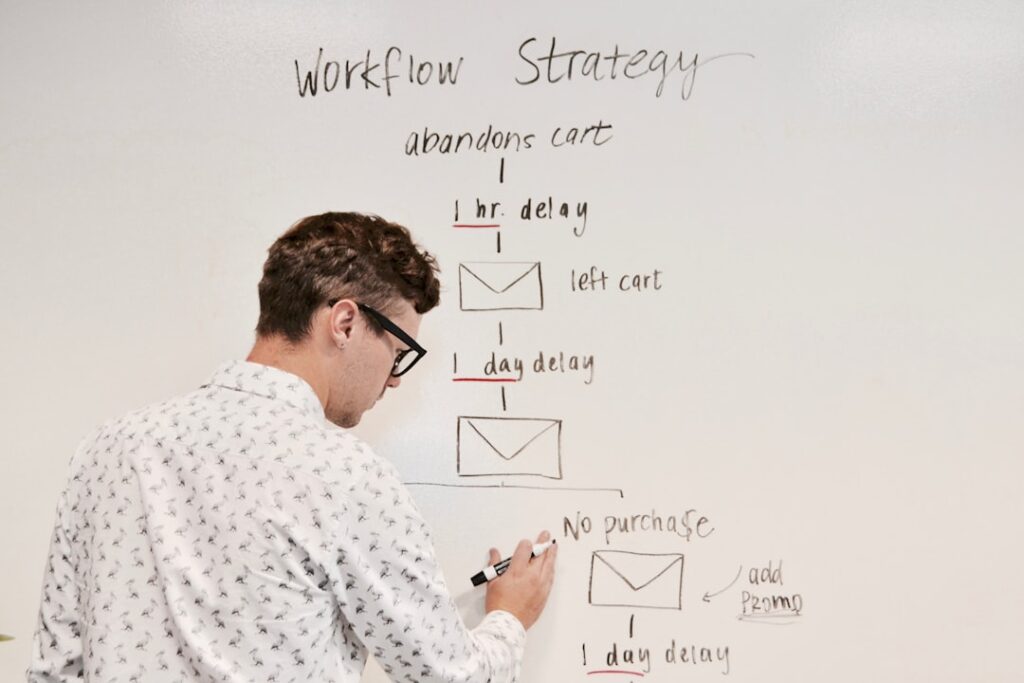
- Conversion Phase: AI detects intent signals for purchase and can trigger personalized offers, provide real-time assistance via live chat, or send timely cart abandonment reminders with tailored incentives.
- Retention & Loyalty: Post-purchase, AI monitors usage patterns, proactively offers tutorials or support, suggests complementary products, and identifies at-risk customers for targeted re-engagement campaigns.
This systematic mapping ensures that AI isn’t just randomly applied, but strategically deployed to solve specific customer pain points and enhance positive experiences. It’s about empowering the customer, not just selling to them.
The AI Toolkit in Action: Delivering Hyper-Personalized Experiences
With data consolidated and journey touchpoints identified, the next step in my proven strategy is deploying specific AI technologies to deliver hyper-personalization. This involves a blend of machine learning models, natural language processing, and predictive analytics.
Harnessing Recommendation Engines and Dynamic Content
Recommendation engines are perhaps the most widely recognized AI personalization tool, but my strategy pushes them further. Beyond “customers who bought this also bought…”, I use AI to power truly dynamic content. This means:
- Personalized Website Experiences: AI analyzes real-time browsing behavior to rearrange website layouts, highlight relevant promotions, and display different product categories for each visitor.
- Tailored Email Marketing: AI segments customers into micro-groups based on nuanced behaviors and preferences, then crafts email content, subject lines, and send times that are unique to each segment, significantly boosting open and click-through rates.
- In-App Personalization: For mobile apps, AI dynamically adjusts features, notifications, and content streams based on user engagement patterns and declared preferences.
The goal is to make every digital interaction feel like a one-on-one conversation, guided by a deep understanding of the individual. Optimizing User Experience is paramount here, as even the best personalization can fail if the user interface is clunky.
Leveraging Conversational AI for Instant Support and Guidance
Chatbots and virtual assistants are no longer basic FAQ machines. My strategy employs advanced conversational AI powered by Natural Language Processing (NLP) to provide instant, personalized support and guidance. These AI agents can:
- Answer Complex Queries: Moving beyond keywords, they understand context and intent, providing accurate answers to complex questions, often retrieving information from a vast knowledge base.
- Guide Through Processes: From troubleshooting technical issues to guiding a customer through a purchase, AI can act as a personalized concierge.
- Collect Feedback and Insights: Conversational AI can subtly gather valuable feedback and even detect sentiment, signaling when a human agent might need to intervene for a more empathetic touch.
This reduces the burden on human support teams while simultaneously providing customers with immediate, round-the-clock assistance, enhancing their journey and satisfaction.
Optimizing for Tomorrow: My Strategy for Continuous AI Learning and Evolution
AI personalization isn’t a set-it-and-forget-it solution. My strategy emphasizes continuous learning and adaptation. The customer journey is constantly evolving, and so too must the AI models that personalize it.
Implementing Feedback Loops for Model Refinement
A core proven method in my approach is establishing robust feedback loops. Every customer interaction, every conversion, every churn event provides valuable data that feeds back into the AI models. Machine learning algorithms continuously analyze this new data to:
- Improve Prediction Accuracy: The more data AI processes, the better it becomes at predicting future customer behavior and preferences.
- Adapt to Changing Trends: As market trends shift or customer preferences evolve, the AI models automatically adjust

![Case Study: [company]’s Smart Use of Ai in Customer Service (my Analysis).](https://usmanai.com/wp-content/uploads/2025/11/image-29-1024x689.jpg)